How to Read Your InBody Scan Results (And Which Numbers Actually Matter)
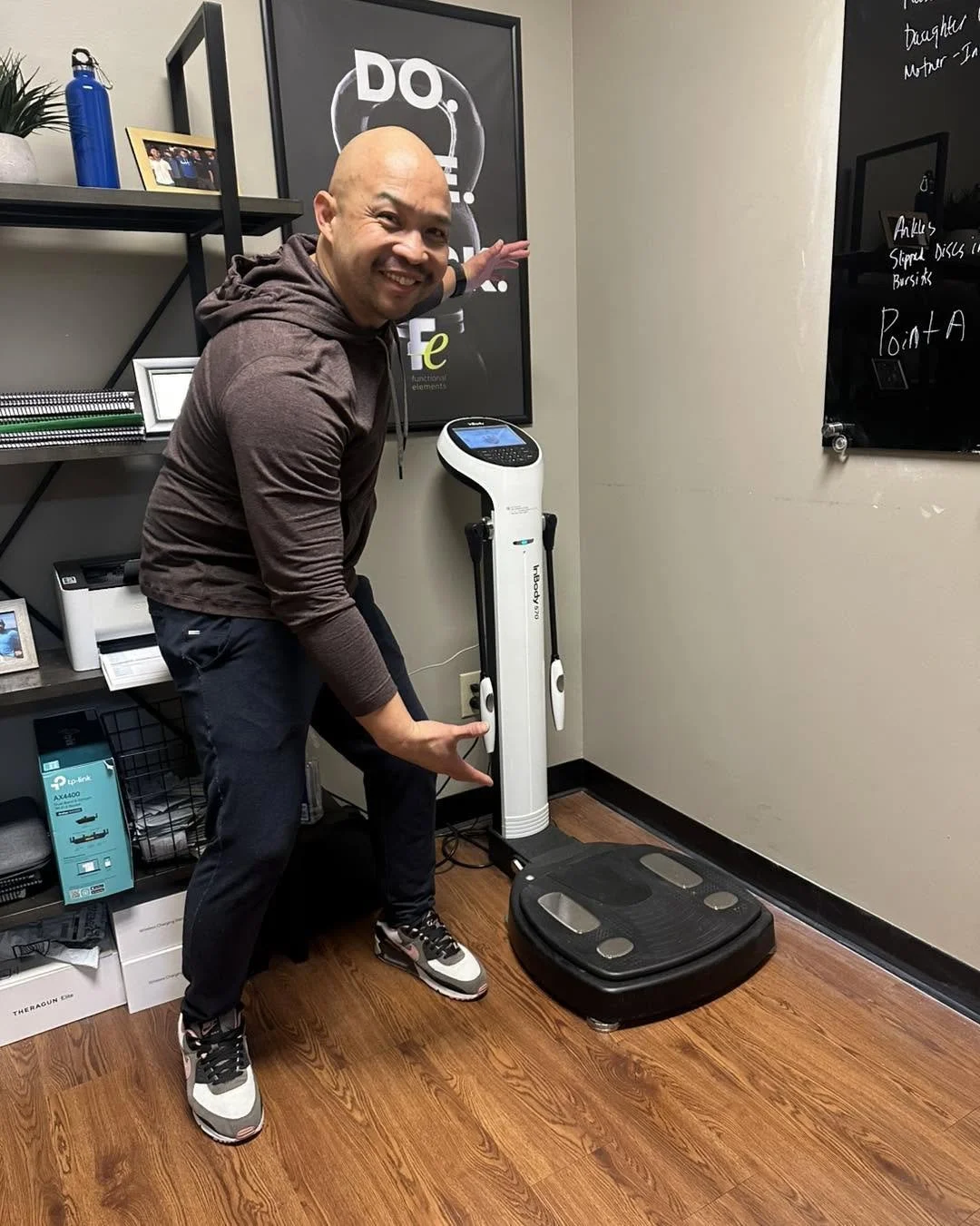
Meet one of the most valuable tools in our studio. The InBody scanner helps us measure what actually matters—muscle, body fat, and meaningful progress over time.
If you've ever had an InBody scan and wondered what all those numbers actually mean, you're not alone.
Whether your goal is weight loss, building muscle, improving body composition, or simply aging healthier after 40, understanding your InBody results can help you make smarter decisions.
At Functional Elements Training & Nutrition in Creve Coeur, MO, we use InBody body composition scans as a decision-making tool—not a report card.
Because while the report includes dozens of measurements, only a handful truly matter.
What Is an InBody Scan?
An InBody scan is a body composition analysis that measures muscle, body fat, water, and other health metrics. Unlike a traditional scale, an InBody scan shows what your weight is made of, helping you track fat loss and muscle gain over time.
Unlike a traditional scale, it shows what your weight is made of, not just the number.
1. Skeletal Muscle Mass (SMM) — The #1 Metric
This is the most important number on your scan.
Skeletal Muscle Mass (SMM) tells you how much functional muscle you have.
Why it matters:
Drives metabolism
Supports joints and reduces injury risk
Improves insulin sensitivity
Strongly tied to longevity and independence
Simple rule: More (quality) muscle = better health and long-term outcomes
What to look for:
Are you maintaining or increasing muscle?
If you’re losing weight, are you preserving muscle?
Reality check: If your weight is going down and your muscle is going down… you’re not improving your body, you’re just shrinking it.
👉 Learn why muscle mass matters more than your weight after 40.
2. Body Fat Mass (BFM) — More Important Than Percentage
Most people focus on body fat percentage. But the more useful number?
Total Body Fat Mass (in pounds)
Why it matters:
Shows how much actual fat you’re carrying
More actionable than percentages
Less influenced by hydration or muscle changes
What to look for:
Is body fat mass trending down over time?
Are changes sustainable—not extreme?
3. Body Fat Percentage (PBF) — Context, Not the Goal
Body fat % gets all the attention—but it needs context.
Why it matters:
Shows ratio of fat to total body weight
Helps categorize general health ranges
The problem:
It can change without real progress
Lose muscle → body fat % can go up
Gain muscle → body fat % may go down
Takeaway:
Use it as a supporting metric, not your primary target.
4. Weight — The Least Important “Big” Number
Yes, it’s on the sheet. No, it’s not the priority.
Weight is simply the sum of:
Muscle
Fat
Water
Everything else
It tells you nothing about:
Strength
Health
Longevity
Body composition
Here's an example.
Person A weighs 180 pounds. Person B also weighs 180 pounds.
One carries 25 pounds more muscle. The other carries 25 pounds more body fat.
The scale says they're identical. Their health says otherwise.
That's exactly why body composition matters more than body weight.
Better question than “Did I lose weight?”
“What did I lose?”
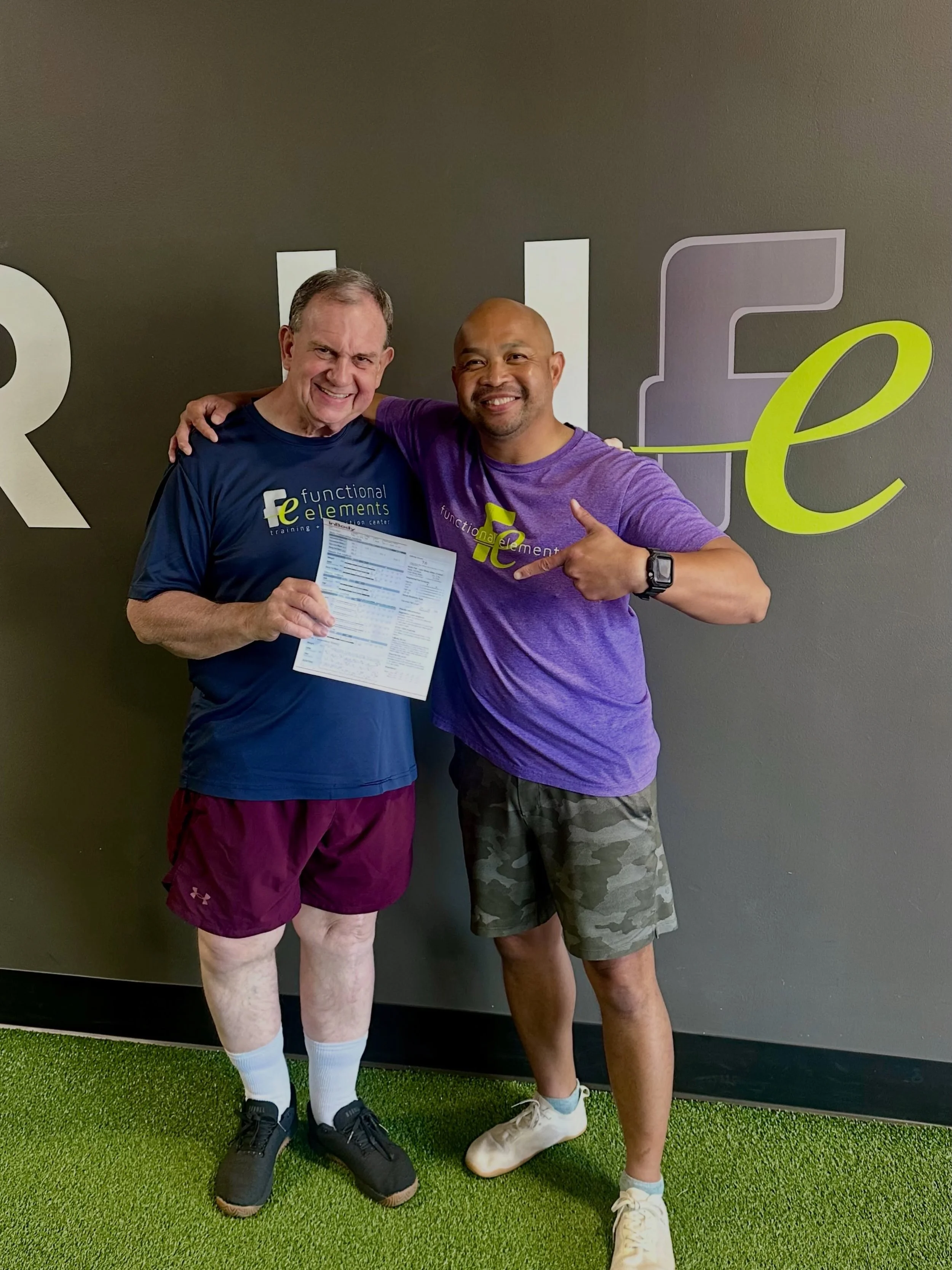
Celebrating a 10-week reassessment with an updated InBody scan. Progress is about more than weight—it's about building a stronger, healthier body.
5. Visceral Fat Level — A Key Health Indicator
Visceral fat is stored around your organs.
Why it matters:
Higher levels are linked to:
Heart disease
Type 2 diabetes
Metabolic dysfunction
What to look for:
Keep levels in a healthy range (typically under 10 on InBody scale)
Focus on steady reduction over time
6. Segmental Lean Analysis — Where Your Muscle Lives
This section shows how muscle is distributed across your body:
Arms
Legs
Trunk
Why it matters:
Identifies imbalances
Guides training focus
Helps prevent injury
Example:
Underdeveloped legs → prioritize squats, hinges, lunges
One side weaker → address asymmetry
What Actually Matters Most (Simplified)
If you want to simplify your entire InBody scan, focus on:
Skeletal Muscle Mass → increasing or stable
Body Fat Mass → decreasing (if fat loss is the goal)
Consistent trends over time
That’s it.
The Biggest Mistake People Make
They treat the InBody scan like a report card, instead of a feedback tool.
One scan means very little. Trends over time tell the story
Also remember:
Hydration impacts results
Time of day matters
Food (and alcohol!) intake matters
Consistency in testing conditions > perfection in numbers.
👉Learn how much protein adults over 40 really need.
Who Should Be Using InBody Scans?
InBody scans are especially valuable for:
Adults 40–70 focused on longevity and strength
Busy professionals who want efficient, data-driven training
Anyone investing in personal training and wanting measurable progress
What Your InBody Scan Should Really Tell You
At Functional Elements, we view an InBody scan like this:
It’s not about chasing numbers—it’s about building a better body.
And the best way to do that?
Strength train consistently
Eat adequate protein
Create a sustainable calorie deficit (if fat loss is the goal)
Stay consistent long enough for trends to emerge
Because in the end…
The goal isn’t just to weigh less. It’s to be stronger, healthier, and more capable for life.
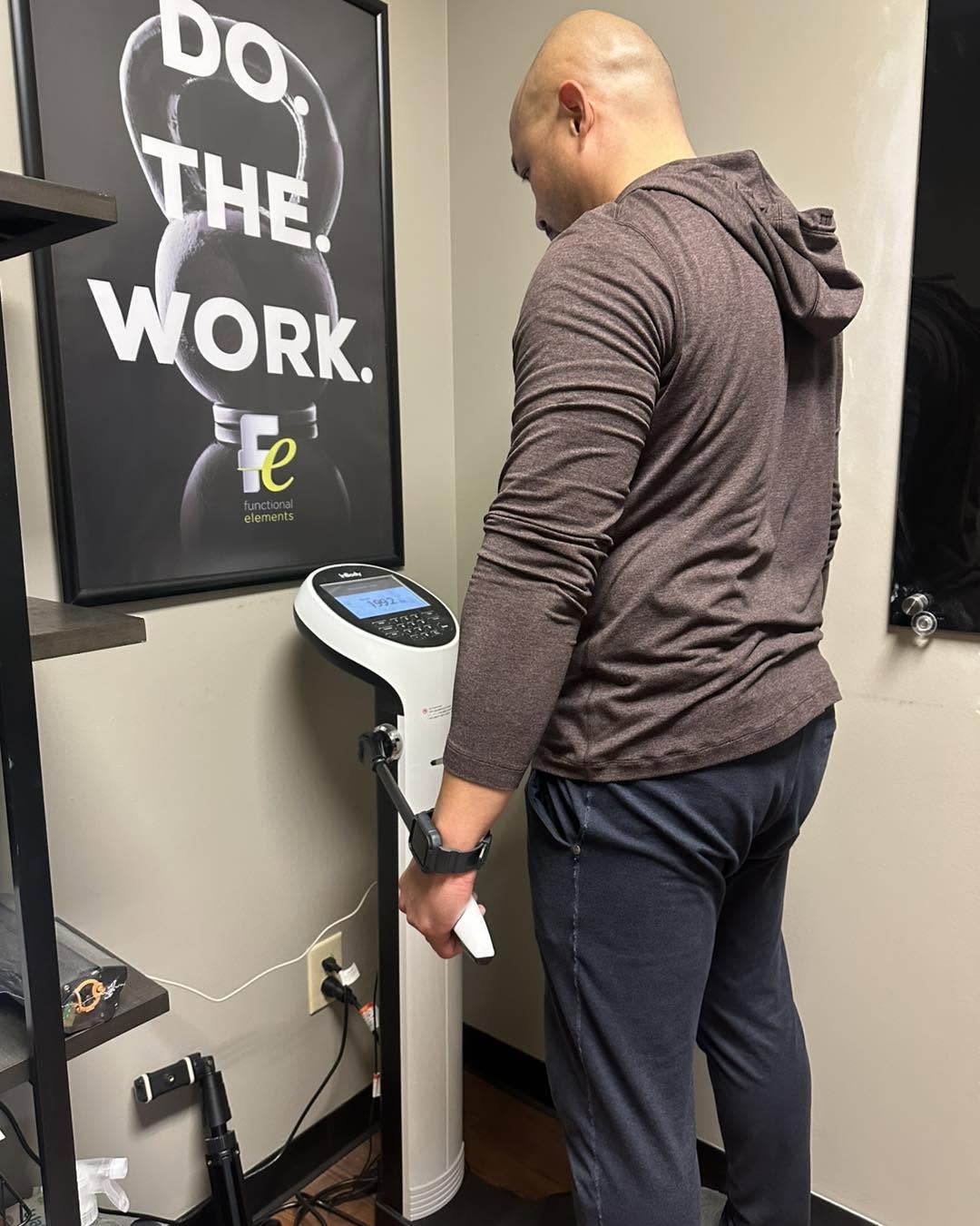
An InBody scan measures far more than your weight, providing valuable insight into muscle mass, body fat, and overall body composition.
Final Thought: What Is an InBody Scan Like?
One of the questions we hear most often is:
"What do I actually have to do during an InBody scan?"
The good news is that an InBody scan is quick, easy, completely non-invasive, and takes less than one minute to complete.
You'll simply:
Remove your shoes and socks
Step onto the InBody scanner
Hold the hand electrodes for approx. 45-60 seconds
Receive a detailed body composition report immediately
There's no pinching. No radiation. No needles. No discomfort.
But here's the important part...
The scan itself isn't the value.
The interpretation is.
At FE Training & Nutrition, we don't just hand you a report full of numbers and send you on your way.
One of our coaches will sit down with you, explain what your results actually mean, answer your questions, identify opportunities for improvement, and help you build a plan based on your goals.
Because knowing your Skeletal Muscle Mass or Body Fat Percentage is interesting...
Knowing what to do with that information is life-changing.
FAQ
What is the most important number on an InBody scan?
Skeletal Muscle Mass (SMM) is the most important metric because it drives metabolism, strength, and long-term health outcomes.
Is body fat percentage accurate on an InBody scan?
It can be useful, but it should not be the primary focus. Body fat mass (in pounds) and trends over time are more reliable indicators.
How often should you do an InBody scan?
At Functional Elements we typically coincide InBody Scans with our approx. 10-week reassessments. At the very least, one to two times per year for benchmarking.
Are InBody scans worth it for people over 40?
Yes. They provide valuable insight into muscle loss, fat gain, and overall body composition—key factors in aging well.
Can hydration affect an InBody scan?
Yes. Hydration levels can influence body composition measurements, which is why it's important to test under similar conditions each time.
Is an InBody scan better than a BMI calculation?
Yes. BMI only considers height and weight, while an InBody scan measures body composition, including skeletal muscle mass, body fat, and visceral fat.
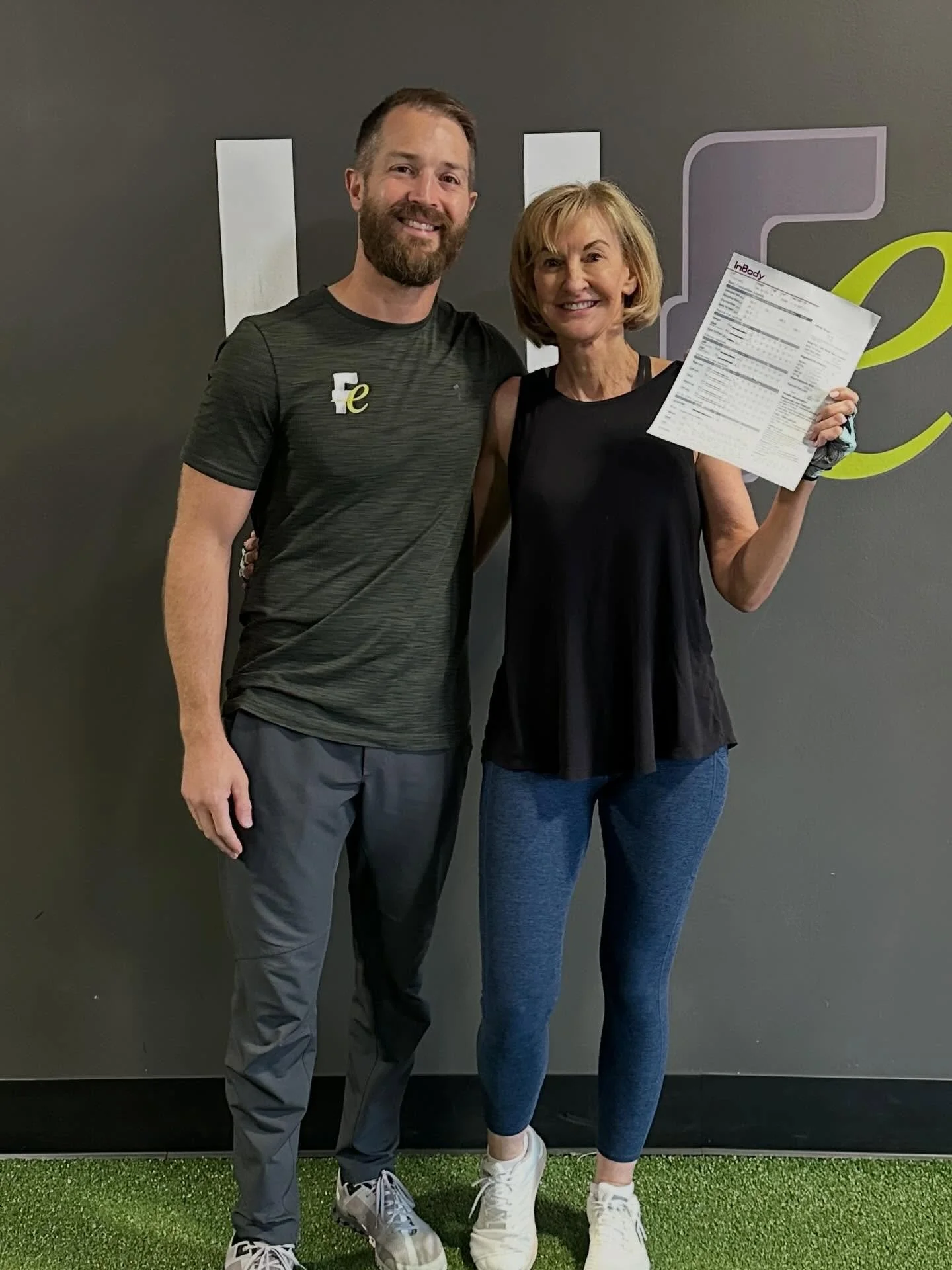
Celebrating a successful 10-week reassessment. An InBody scan helps us measure meaningful progress in muscle mass, body fat, and body composition—not just changes on the scale.
Ready to See What’s Really Changing?
The scale only tells part of the story.
An InBody scan shows what your body is actually made of—and gives you a roadmap for improving your muscle mass, reducing body fat, and tracking meaningful progress over time.
If you're in Creve Coeur or the St. Louis area, schedule an InBody scan with Functional Elements Training & Nutrition and let our team help you understand exactly what your results mean - and how to use them moving forward.
And always remember ...
GIVE YOUR BODY WHAT IT NEEDS, WHEN IT NEEDS IT!
Tony Muyco III, CSCS, PPSC, PPSC*KB, CFSC
Functional Elements Training and Nutrition Center
Partner and Director of Training
(c) 314.401.5047
functionalelements@gmail.com
http://www.functionalelements.net
If you need a kickstart to get your fitness, nutrition and recovery program properly synched, we can help. It's what we do. Check out our 14-day 360• to get you motivated, educated and aligned with the very best Functional Elements Training & Nutrition has to over, over a period of just 14 days.