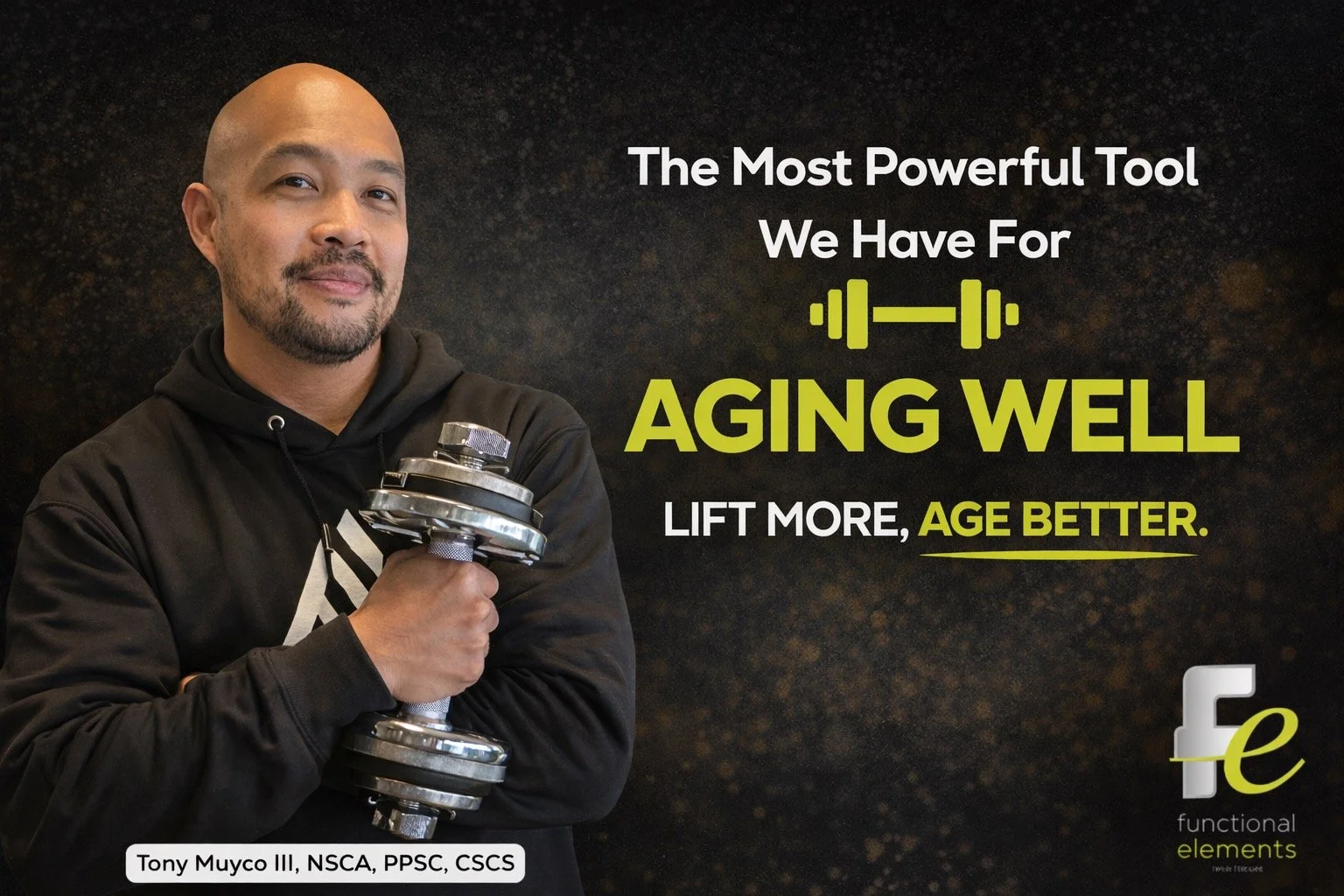
Strength Training: The Most Powerful Tool We Have for Aging Well
If there’s one thing I’d encourage almost every adult—especially over 40 in the St. Louis area—to prioritize, it’s this:
Strength training.
Not because it’s trendy.
Not because it looks good on Instagram.
But because it directly impacts how long—and how well—you live.
Why Strength Training Matters More as You Age
As we age, our bodies naturally lose muscle, strength, and resilience. This process, called sarcopenia, can begin as early as your 30s and accelerates over time.
Without intervention, this leads to:
Decreased mobility
Increased body fat
Higher risk of injury and chronic disease
Loss of independence
Strength training is the most effective way to slow, and even reverse, this decline.
1. Muscle Is the Organ of Longevity
We often focus on heart health, cholesterol, or blood pressure.
But one of the most important (and overlooked) health markers?
Skeletal muscle.
Muscle plays a critical role in:
Metabolism
Blood sugar control
Hormonal balance
Movement and independence
Less muscle = higher risk of:
Falls
Fatigue
Metabolic dysfunction
More muscle = more resilience.
2. Strength Training Improves Metabolism (Even at Rest)
Muscle is metabolically active tissue.
That means the more muscle you have, the more efficiently your body:
Burns calories
Processes carbohydrates
Regulates energy
Strength training helps:
Preserve lean muscle during fat loss
Improve insulin sensitivity
Support sustainable weight management
At Functional Elements Training & Nutrition, we say it simply:
“Weight loss is math—but muscle makes the math work in your favor.”
3. Strength Training Reduces Pain and Protects Joints
A common mistake:
“I can’t lift because something hurts.”
In reality, not lifting is often why it hurts.
Proper strength training:
Strengthens muscles around joints
Improves alignment and stability
Reduces chronic pain (back, knees, shoulders)
Strong muscles act as a built-in support system for your body.
4. It Improves Balance, Coordination, and Prevents Falls
One of the biggest health risks as we age?
Falling.
Falls can lead to:
Fractures
Long recovery periods
Loss of independence
Strength training improves:
Balance
Coordination
Reaction time
Confidence in movement
And this doesn’t start at 65—it starts now.
You don’t wait until retirement to build your 401(k).
Don’t wait to build your strength either.
5. Strength Training Supports Bone Density
Strength training places controlled stress on your bones—which is exactly what they need.
This helps:
Maintain bone density
Reduce risk of osteoporosis
Lower fracture risk
Think of it as long-term insurance for your skeletal system.
6. It Improves Energy, Mood, and Confidence
This is where things go beyond physical health.
Clients consistently report:
More daily energy
Better sleep
Improved mood
Increased confidence
Because strength isn’t just physical—it’s psychological.
It shows up in:
Carrying groceries with ease
Playing with kids or grandkids
Moving through life without hesitation
Strength gives you options. And options equal freedom.
7. Strength Training Helps You Stay Independent Longer
At the end of the day, this is the real goal.
Not just living longer—but living better.
Strength training helps you:
Stay active
Stay capable
Stay independent
Because the alternative isn’t just aging.
It’s losing the ability to do the things you love.
👉 But what if you strength train now…what would happen if you stopped?
Can You Start Strength Training After 40 (or 50, or 60)?
Yes—and you should.
Strength training is:
Safe when properly coached
Scalable to any fitness level
Effective at any age
You don’t need to train like an athlete.
You just need:
A plan
Proper coaching
Consistency
👉 Think you're too old to start strength training? Think again.
The Bottom Line: Strength Training Is Foundational for Aging Well
Aging is inevitable. Losing your strength, mobility and independence doesn't have to be.
Strength training is one of the most effective ways to maintain muscle, support your health and keep doing the things you enjoy as you get older.
And whether you're 40, 60 or 80, there's still an opportunity to get stronger.
The best time to start was years ago. The next best time is now.
Frequently Asked Questions About Strength Training and Aging
Is strength training good for adults over 50?
Absolutely. Strength training is one of the most effective ways to maintain muscle mass, improve physical function and support healthy aging. It can help with everyday activities like climbing stairs, carrying groceries and getting up from the floor. And the benefits aren't limited to people who have been exercising for years.
How often should adults over 50 strength train?
For most adults, at least two strength-training sessions per week is a great starting point. The key is working the major muscle groups, allowing adequate recovery and gradually increasing the challenge as your body adapts. Consistency matters much more than trying to do everything at once.
Can you still build muscle after age 60 or 70?
Yes! Research shows that older adults can increase strength and build muscle through progressive resistance training, even if they've never lifted weights before. Progress may look different at 70 than it does at 30, but your muscles still respond to appropriate training. It's never too late to get stronger.
Does strength training help prevent age-related muscle loss?
Yes. Age-related muscle loss, often referred to as sarcopenia, can affect strength, balance and independence over time. Regular resistance training is one of the most effective ways to slow that decline and, in many cases, improve muscle strength and function. Pairing strength training with adequate protein and good nutrition can further support muscle maintenance.
Ready to Get Stronger for Life?
At Functional Elements, we help adults build strength, move better and stay active for the long haul. No cookie-cutter workouts. Just personalized training built around your goals, abilities and where you are today.
Our 14-Day 360° is a great place to start. You'll get a firsthand look at how we combine personal training, nutrition and body composition assessments to help you make meaningful progress.
Get Started with the 14-Day 360° →
Tony Muyco III, CSCS, PPSC, PPSC*KB, CFSC
Partner & Director of Training
Functional Elements Training & Nutrition Center
314.401.5047 http://www.functionalelements.net