What Is a Good InBody Score? How to Understand and Improve Your Results
If you’ve ever had an InBody scan, one of the first numbers you probably noticed was your InBody Score.
But what does that score actually mean? What is considered a good InBody Score? And more importantly, how should you use it when evaluating your fitness, muscle mass, body fat, and overall progress?
Updated September 15, 2026
If you’ve ever had an InBody scan, one of the first numbers you probably noticed was your InBody Score.
But what does that score actually mean? What is considered a good InBody Score? And more importantly, how should you use it when evaluating your fitness, muscle mass, body fat, and overall progress?
At Functional Elements Training & Nutrition in Creve Coeur, Missouri, we use InBody body composition testing as an important part of assessing new clients and tracking progress over time.
Why?
Because the number on a traditional bathroom scale only tells us how much you weigh. It does not tell us how much of that weight is muscle, body fat, water, or other lean tissue.
That is where an InBody scan becomes much more useful.
What Is an InBody Scan?
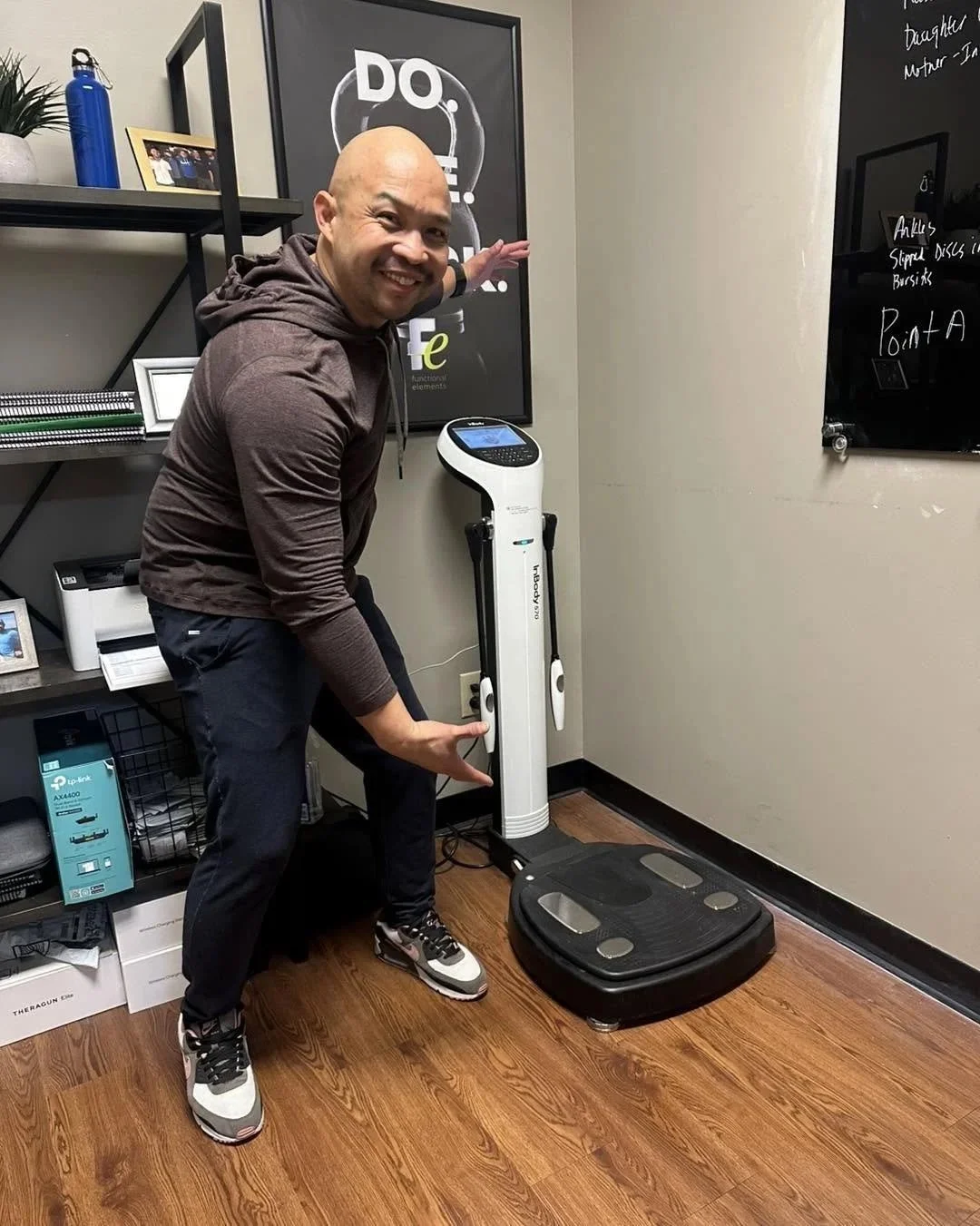
InBody body composition testing is part of how we establish a baseline and track meaningful changes over time at Functional Elements.
An InBody scan is a body composition assessment that provides information about what your body weight is actually made of.
Clients simply step onto the InBody, hold the handles, and complete the scan in less than a minute.
Depending on the InBody model being used, the results can provide information such as:
Skeletal muscle mass
Body fat mass
Body fat percentage
Visceral fat
Body water
Segmental lean analysis
Basal metabolic rate
Overall InBody Score
For our personal training coaches at Functional Elements, this information provides a much more complete picture than body weight alone. We use InBody data to help guide training decisions, establish a baseline, and monitor changes in body composition over time.
What Is an InBody Score?
The InBody Score is a numerical score designed to provide a simple snapshot of your overall body composition.
It considers the relationship between your muscle mass and body fat compared with reference values for someone of your height and sex.
The score can be useful as a benchmark, but it should not be viewed as a complete measure of health or fitness.
That distinction is important.
Someone can improve significantly in muscle mass, strength, body fat percentage, mobility, or overall fitness without necessarily seeing a dramatic change in a single score.
That is why we look at the entire InBody report, not just the InBody Score.
For a deeper breakdown of the full report, see our guide to How to Read InBody Scan Results.
How Is the InBody Score Calculated?
The InBody Score is influenced primarily by the balance between lean body mass and body fat mass.
Generally speaking:
Having more healthy lean mass can positively influence the score.
Having excess body fat relative to lean mass can lower the score.
The purpose is not simply to chase a higher number.
The real value of the score is using it alongside the rest of your body composition data to understand whether your body is changing in the direction you want.
What Is a Good InBody Score?
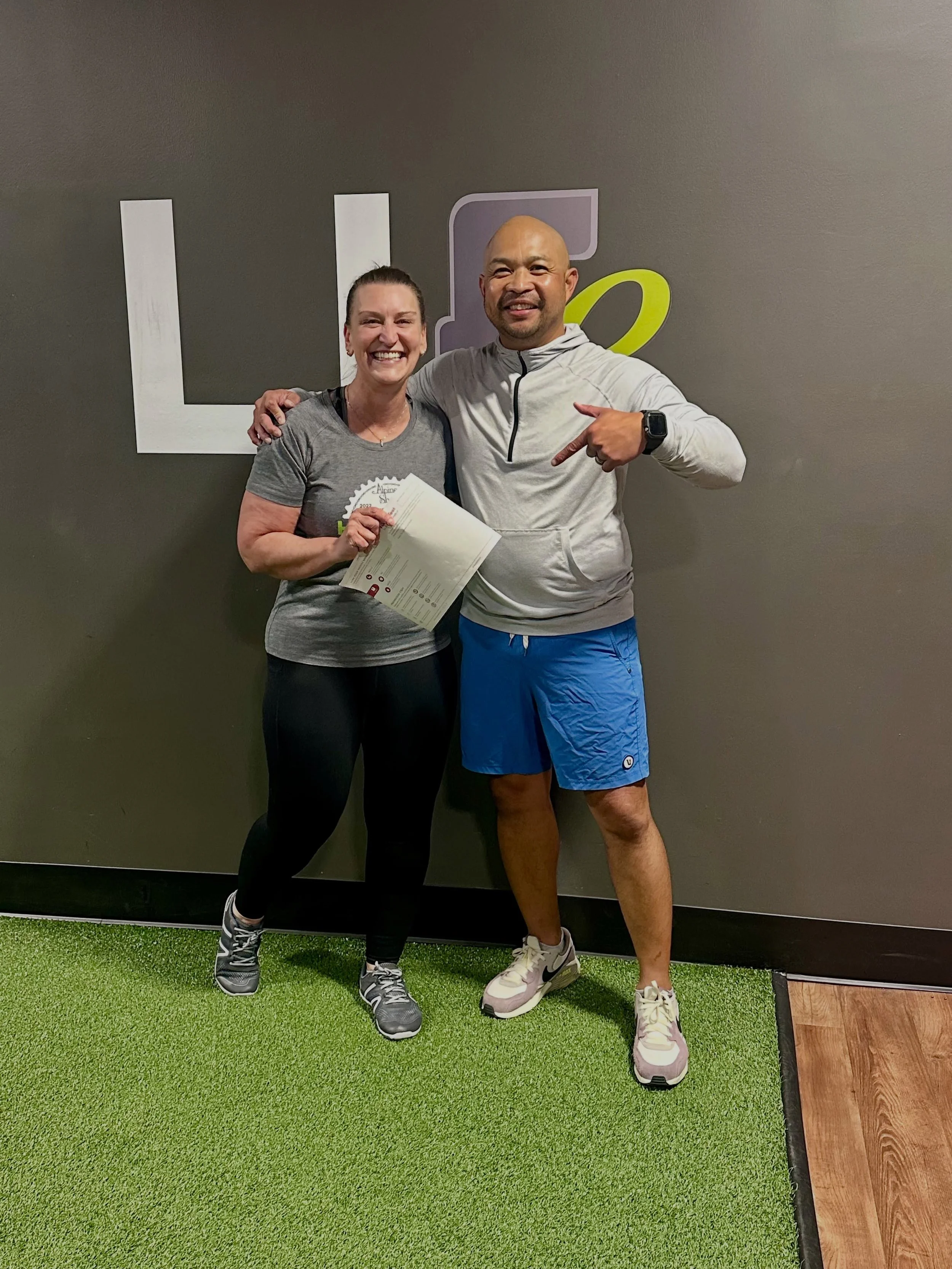
The InBody scan produces a detailed body composition report showing measurements such as skeletal muscle mass, body fat percentage, visceral fat, and other key data points. Here, Tony reviews the report with a Functional Elements client to help turn the numbers into a clear plan forward.
A common question we hear is:
“What is a good InBody Score?”
The answer is more nuanced than simply aiming for one specific number.
InBody commonly uses 80 points as a reference point for balanced body composition, but your individual results should always be interpreted in context.
Your age, training history, muscle mass, body fat, goals, and overall health all matter.
Rather than focusing exclusively on whether your score is above or below a particular number, we typically look at several measurements together.
For example:
Someone may maintain the same body weight while losing body fat and gaining muscle.
The bathroom scale might show very little change.
The InBody scan, however, may show meaningful improvements in body composition.
That is one reason body composition testing can be so valuable.
How Can You Improve Your InBody Score?
For most people, improving body composition comes down to two primary goals:
Build or preserve muscle.
Reduce excess body fat when appropriate.
Of course, saying that is easier than doing it.
The real key is consistency.
Consistent strength training, appropriate nutrition, adequate protein intake, recovery, sleep, and sustainable habits can all play important roles in improving body composition over time.
At Functional Elements, we are much more interested in long-term trends than one isolated scan.
One measurement gives you a snapshot.
Repeated measurements can show you whether your training and nutrition program are actually working.
Strength training is one of the most effective ways to build and preserve lean muscle over time.
Learn more in our article, Strength Training: The Most Powerful Tool We Have for Aging Well.
Why Body Composition Matters More Than Body Weight Alone
The days of relying solely on body weight to evaluate fitness progress are over.
Body weight can certainly be useful, but it tells only part of the story.
Consider two people who both weigh 175 pounds.
One may have significantly more muscle and less body fat than the other.
The number on the scale is identical.
Their body composition is not.
This is why measurements such as skeletal muscle mass, body fat percentage, visceral fat, and lean body mass can provide much more meaningful information.
For many adults, particularly those over 40, preserving and building muscle becomes increasingly important.
The goal is not simply to weigh less.
The goal is to improve what that weight is made of.
How Often Should You Get an InBody Scan?
You generally do not need an InBody scan every week.
Body composition changes take time.
For many people, repeating a scan every several weeks or every few months provides a much more useful comparison.
At Functional Elements, we regularly use InBody testing to establish an initial baseline and then reassess clients periodically as their training and nutrition programs progress.
We also have people who do not train with us regularly but come in several times each year simply to monitor their body composition.
Looking for an InBody Scan in Creve Coeur or St. Louis?
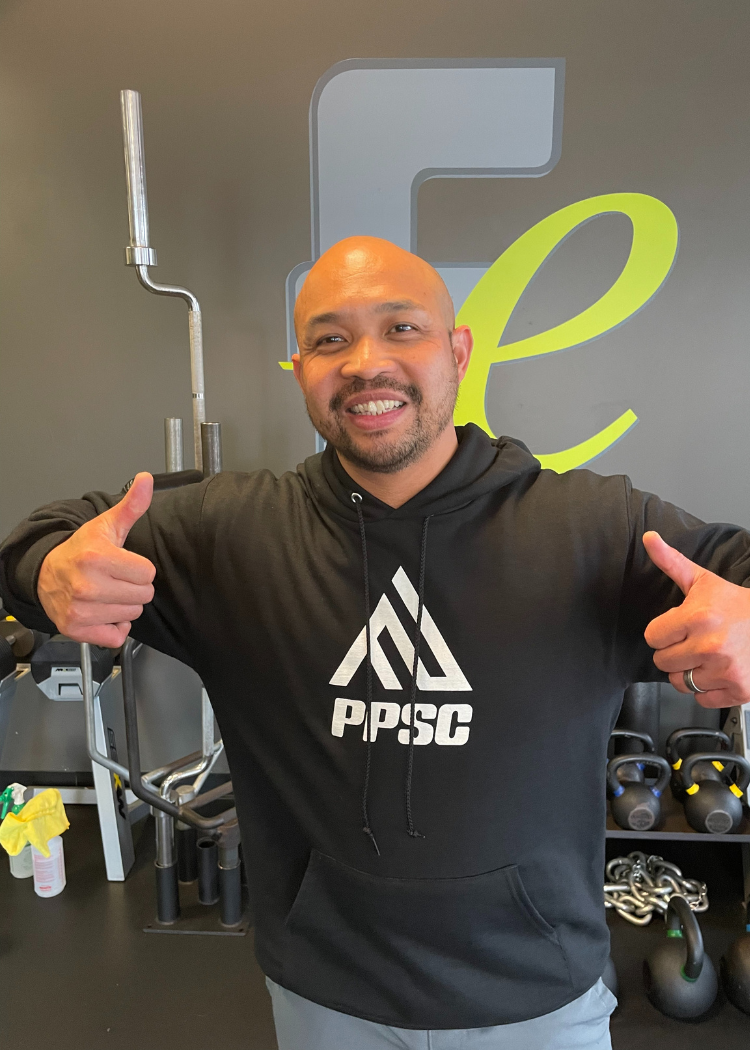
Tony Muyco, CSCS, PPSC, PPSC*KB, CFSC, Director of Training at Functional Elements.
Functional Elements Training & Nutrition offers InBody body composition testing in Creve Coeur, Missouri, serving clients throughout the St. Louis area.
But we believe the scan itself is only the beginning.
Getting a page full of numbers is not particularly helpful if you do not understand what they mean.
Our goal is to help you understand the important parts of your results, what may be worth paying attention to, and what your next step should be.
Whether your goal is to gain muscle, reduce body fat, improve strength, move better, or simply establish a baseline, an InBody assessment can provide useful information about where you are starting.
Want to Go Beyond the Scan?
Every new Functional Elements client begins with our 14-Day 360°.
The 14-Day 360° includes personalized training, InBody body composition assessment, nutrition guidance, coach meetings, and two weeks of hands-on experience with the Functional Elements approach.
Rather than guessing what your body needs, we start with data, movement, coaching, and real-world experience.
Learn more about the 14-Day 360° here.
Bottom Line
Your InBody Score can be a useful benchmark.
But the number itself is not the goal.
The real value of an InBody scan is understanding what is happening with your muscle mass, body fat, visceral fat, and overall body composition over time.
And that information becomes even more valuable when it is used to make better decisions about your training, nutrition, and recovery.
Remember …
Give Your Body What It Needs, When It Needs It.
Tony Muyco III, CSCS, PPSC, PPSC*KB, CFSC
Functional Elements Training and Nutrition Center
Partner and Director of Training
(c) 314.401.5047
functionalelements@gmail.com
http://www.functionalelements.net
If you need a kickstart to get your fitness, nutrition and recovery program properly synched, we can help. It's what we do. Check out our 14-day 360• to get you motivated, educated and aligned with the very best Functional Elements Training & Nutrition has to over, over a period of just 14 days.